
The GTO Textbook
A comprehensive course in theoretical poker strategy, built for pros (current or aspiring) and advanced amateurs.
What's included
This is a textbook-style poker strategy course with ~20 hours' worth of interactive content, taking you from foundational principles to advanced theory.
The course body contains over 100 targeted exercises. Then, you'll expand and test your knowledge with three problem sets containing 55 problems.
You'll learn a comprehensive slate of simplified strategy advice to get you playing, and thinking, like a solver.
Join the discord to discuss course content, poker strategy, and more.
Who it's for
- Aspiring professionals; anyone grinding ~25NL - 200NL online, or up to 5-10 live
- Mid-stakes professionals looking to plug systematic leaks
- Serious amateurs
What you'll learn
- The conceptual groundwork to explain any solver output
- A complete set of strategy rules to approximate GTO at any node in the game tree
- How to reason through any poker hand
- Much more
Inside the course
The GTO Textbook builds a complete theoretical strategy from the ground up. You'll learn a structured system of heuristics and concepts, with each chapter building off the last.
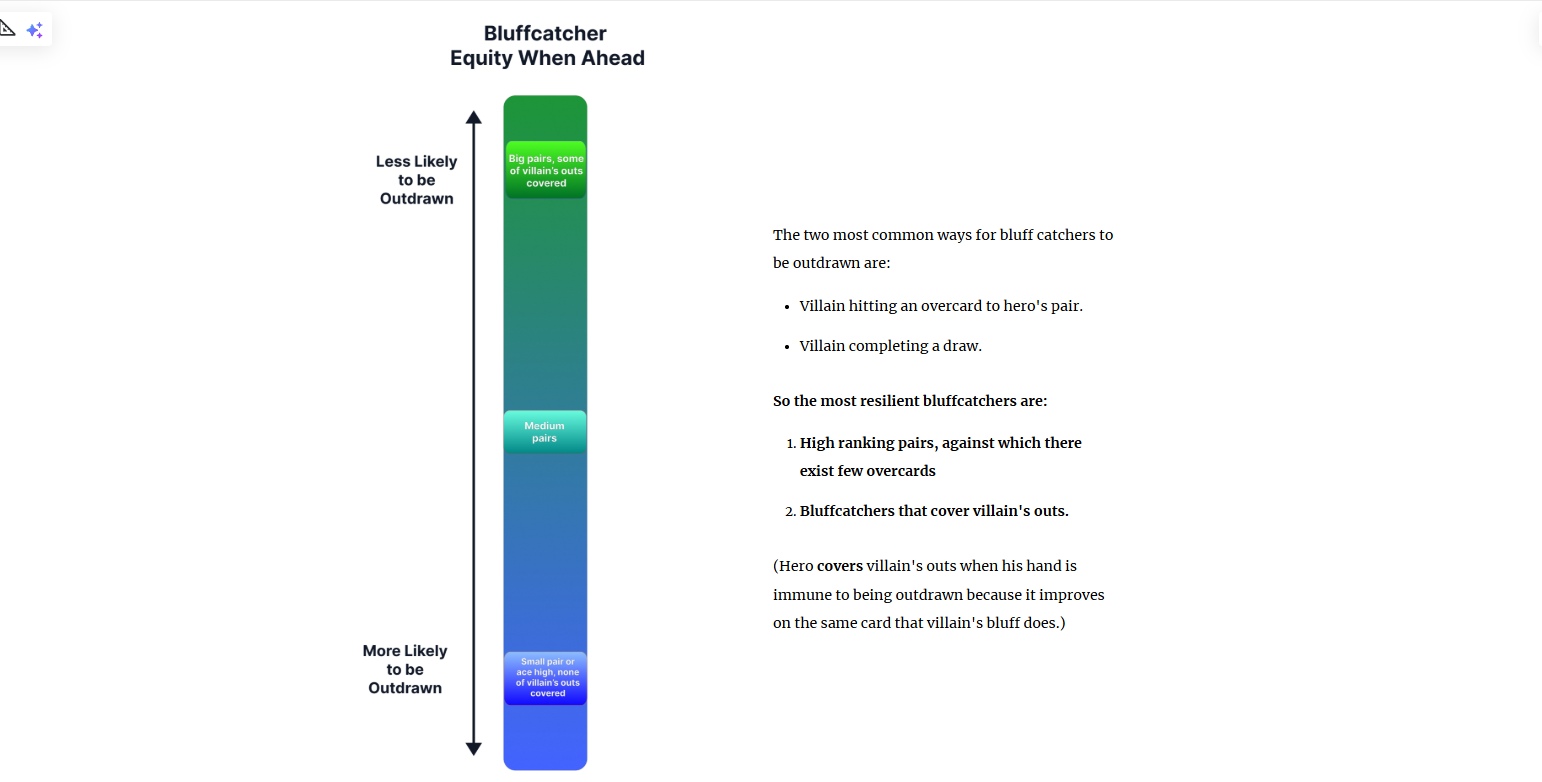
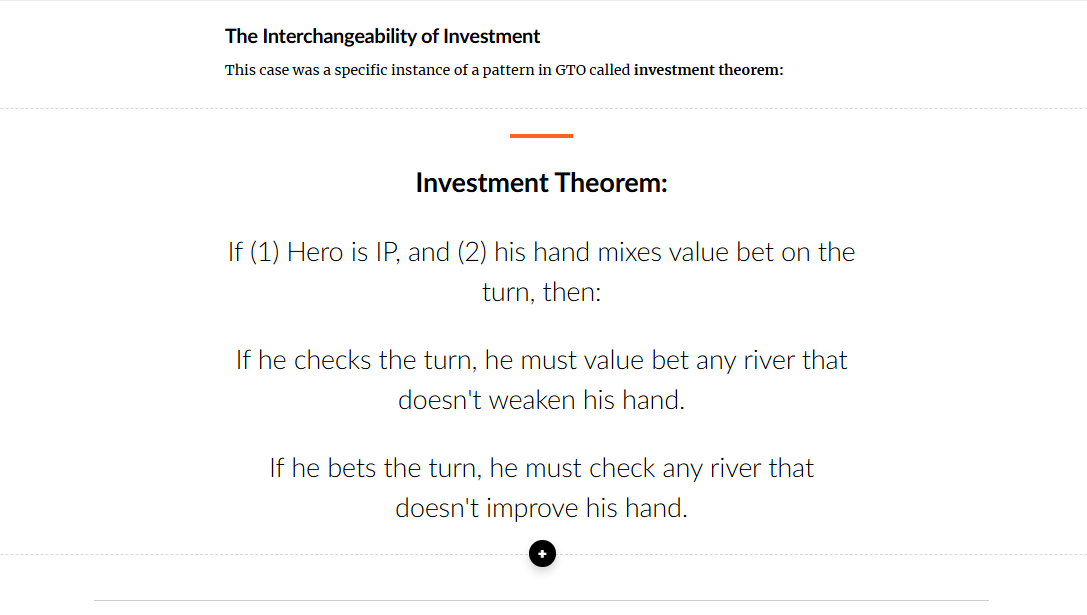
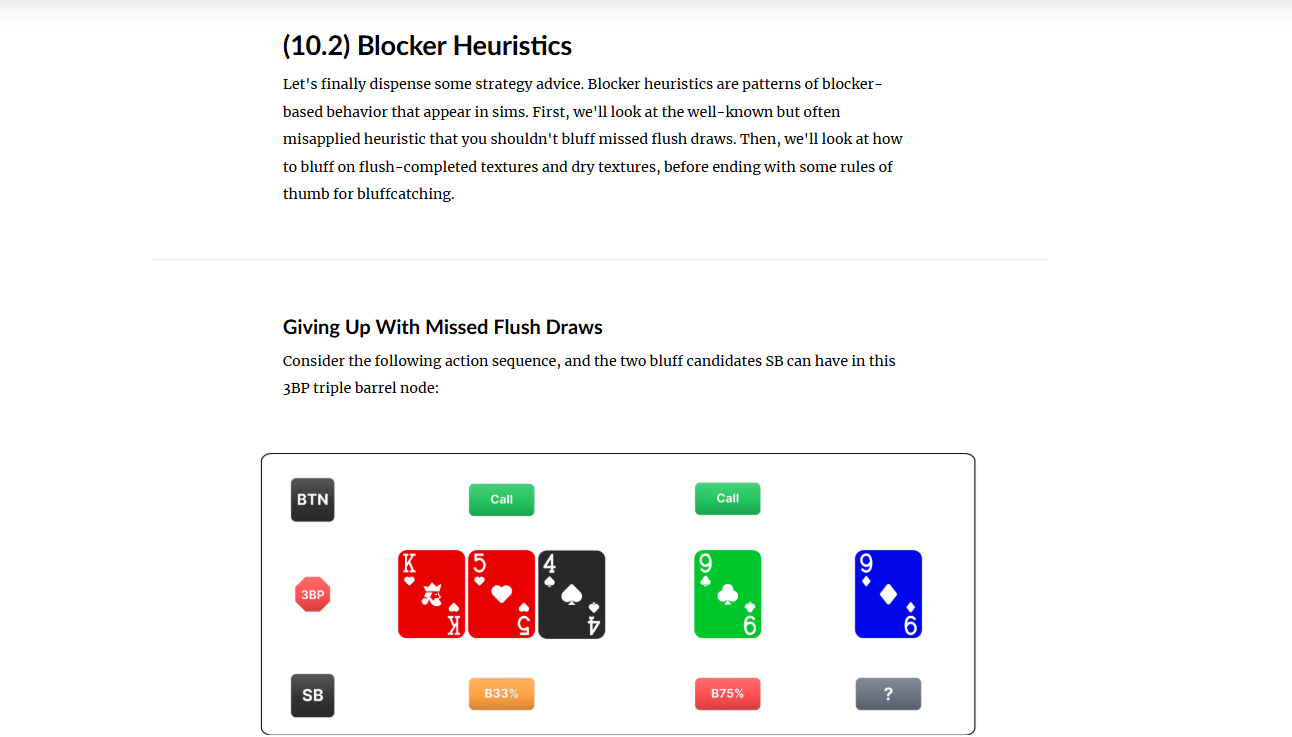
Table of contents
01Introduction & Catch-up
- (1.1) Solvers and GTO
- (1.2) Equity and EV
- (1.3) Value Betting
- (1.4) Bluffing
- (1.5) Range Shape
02Balance
- (2.1) River Toy Game
- (2.2) Minimum Defense Frequency
- (2.3) The Pot Odds Norm
- (2.4) Balanced Aggression
- (2.5) Balanced Checking
03Node Favorability
- (3.1) Node Favorability
- (3.2) Node Favorability: The Four Factors
- (3.3) Node Favorability: Practice
- (3.4) Node Favorability: Strategy Applications
04Range Advantage
- (4.1) The Thermodynamics of Range Advantage
- (4.2) Range Advantage: Strategy Applications
- (4.3) Bluffing the River
- (4.4) Range Advantage Dynamics: Advanced Concepts
05Position
- (5.1) The Positional Difference
- (5.2) Strategy Applications
06Playing Value
- (6.1) Investment Ceiling
- (6.2) Urgency
- (6.3) Cappedness
07Polarization - Part 1
- (7.1) Polarization: Re-introduction
- (7.2) The Thermodynamics of Range Shape
08Polarization - Part 2
- (8.1) The Condensation Theorems
- (8.2) The Greed Theorems
09Facing Aggression
- (9.1) River Defense: The Hand Categories
- (9.2) Value Beaters (on Flop and Turn)
- (9.3) Bluff Laggers (on Flop and Turn)
- (9.4) Bluff Catchers
10Blockers
- (10.1) Blockers: a Conceptual Minefield
- (10.2) Blocker Heuristics
11The Sources of EV
- (11.1) The EV of Betting
- (11.2) The EV of Checking
Frequently asked questions
Can a beginner take this course?+
Yes -- if they're willing to put up with a steep learning curve. The course's difficulty was balanced for intermediate players and amateurs with background in poker strategy, and is designed to help advance their game to professional levels. But the introductory chapters of the course are designed to catch up less experienced players.
What formats does the course teach?+
The principles taught in the course apply to all no-limit hold'em formats, but the hand examples are all from cash games. Cash game grinders will therefore get the most out of it -- there's no tournament-specific advice in the course.
Do I need a solver to follow along?+
No. All solver outputs are embedded directly in the course. A solver is helpful for going deeper but is not required.
How long do I have access?+
For life, after a one-time payment.
What is your refund policy?+
Due to the digital nature of this product and immediate access to all course materials, we have to be somewhat judicious about refunds to prevent piracy. That said, if the product is not to your satisfaction and you contact Alex within 30 days to explain your issues in detail, he's willing to work something out.